“Florida’s insurance market has been the subject of extensive and often excellent journalism for more than two decades. The reporting has been accurate. It has exposed genuine misconduct, named real harms, and held real people accountable. It has done what journalism, at its best, does.”
But, as Don Brown (See NOTE#1) states in his “Story About the Wrong Story,” journalism has not resolved the crisis. He meticulously builds the case that the framework for telling the story has “…failed to expose the right villains.”
In his latest book, “Below Deck: The Story About the Wrong Story,” former independent agent, former Chair of the House Insurance Committee, and chronicler of Florida’s continuing failure to address what he penned the “900 Pound Gorilla in Your Living Room!”, … Don Brown tells us three important things at once: First, he extols youthful lessons of life on the Choctawhatchee Bay; second, he recounts how he failed attempting to apply those lessons to the legislative enactments he fought against.
And finally, “Below Deck” is a communication argument — about why the story Florida has been told about its insurance crisis is not merely insufficient but actively counterproductive, and what a different kind of conversation might produce.
The story Brown references is structurally incapable of reaching the problem that drives the crisis. It’s a “villain-victim” model, he argues…one that converts collaborators into adversaries.
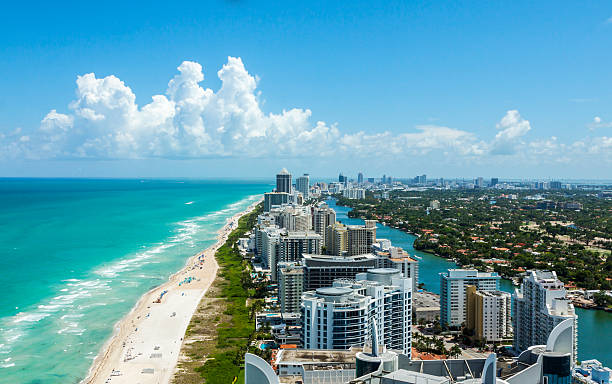
According to Brown: “You can regulate every insurance executive in Florida with perfect rigor, pass every transparency bill ever proposed, and elect legislators of unimpeachable integrity to enforce it. And when you have done all of that, Florida will still be a peninsula that accounts for 41 percent of U.S. hurricane landfalls, still adding 550 residents to high-risk coastal zones every day, with the RCI (Risk Concentration Index) still at 58 and moving toward the critical stress region.”
RCI or Risk Concentration Index is the calculation Brown developed to measure how far Florida’s residential insurance system has moved toward a point of no return, that is… “the boundary beyond which conventional insurance mechanisms become increasingly unable to function at prices households can afford.”
He points out that the degree of strain on the system depends on concentration: “…how much of total insured value sits in the storm path, and how much has piled up there over decades of coastal development.”
Brown’s index (RCI) runs from zero to one hundred and is calibrated against real market failures — Hawaii after Hurricane Iniki, Louisiana after Hurricane Katrina, Puerto Rico after Hurricane Maria. Below an RCI of approximately 45, private markets function normally. Between 46 and 63, markets show persistent stress. Between 64 and 68, the system enters a critical stress region where dysfunction becomes increasingly probable. Above 70, the calibration data from comparable jurisdictions suggests systemic failure becomes self-reinforcing.
With an RCI of 58, Florida is not only under “Persistent Stress” but, it is moving inexorably to “Critical” levels.
This fascinating methodology for helping policymakers calculate the value of their enactments, can move Florida away from politics altogether and instead to a lasered quest for longer-term solutions benefiting all Floridians, coastal and non-coastal. What would happen, for example, if all voters understood and employed such an index at the ballot box?
I found “Below Deck” to be an intriguing, thought provoking, read. I highly recommend this groundbreaker to anyone dealing with Florida’s property insurance market–especially those accountable policymakers and thought leaders in search of true reform.
Below Deck will be available shortly through Rebell Books and at dondbrownbooks.com.
##end##
NOTE #1: Don D. Brown served as Chairman of the Florida House Insurance Committee and cast one of two dissenting votes against House Bill 1A in January 2007. He currently serves on the Florida Hurricane Catastrophe Fund Advisory Council and the Florida Building Commission. He is the author of more than forty published titles, including the Florida Resilience Doctrine series. He lives in DeFuniak Springs, Florida.
Please view “The Johnson Strategies Story”
IMPORTANT: If you enjoyed this post you’re invited to subscribe for automatic notifications by going to: www.johnsonstrategiesllc.com. Enter your email address where indicated. If you’re already on the website at Johnson Strategies, LLC, go to the home page and enter your email address on the right-hand side. Remember, you’ll receive an email confirming your acceptance, so…check and clear your spam filter for notifications from Johnson Strategies, LLC. ENJOY!




Leave a Reply
You must be logged in to post a comment.